Biryani is personal. Any person who has the ability to cook meat and rice and put it together can claim the knowhow to put together a biryani. There is a plethora of cookbooks, videos on how to cook a perfect biryani, regional variants, and squabbles as to who has the best biryani. After all, the general understanding is that biryani evolved from solider food who during travel put meat and rice together to make a one pot meal. So I guess a ongoing war is justified.
Then there is the various methods of cooking a biryani – kacchi (raw), pakki (cooked), dum (steam). And last but not the least there is the biryani vs pulao debate. I will reserve all these for some other day.
I learnt to make biryani during my work years in Delhi and also from the chef who worked at my uncle’s restaurant and managed his catering business. I am not a purist. For the last few years using various combinations and cooking methods I have been working on versions of biryani my family and I would like to eat. Off late because of a dairy-related health condition of a family member I have been working on creating a biryani without any dairy products.
I am particular about four things in a biryani. One.. biryani is a rice and meat dish. Sorry….veg biryani and all the other “alternatives” just don’t cut it for me. Second, biryani is not about meat. It is about rice. If the Japanese pay homage to their rice cooking skills to make a perfect sushi, the same parallel applies to the biryani. Third.. I strongly dislike a spicy biryani. To me biryani should be delicate and subtle without burning the roof of your mouth and then your guts. I have always felt that biryani served in the South Asian restaurants in the U.S. is way to over-spiced, maybe to justify the much heralded notion that all of Indian subcontinent food is spicy. Fourth.. I dislike the whole spices that sometimes embellish a biryani. There is nothing worse than eating a decent biryani and suddenly biting into a piece of cinnamon stick, clove, black cardamom and worst – star anise. After that everything is slippery slope.
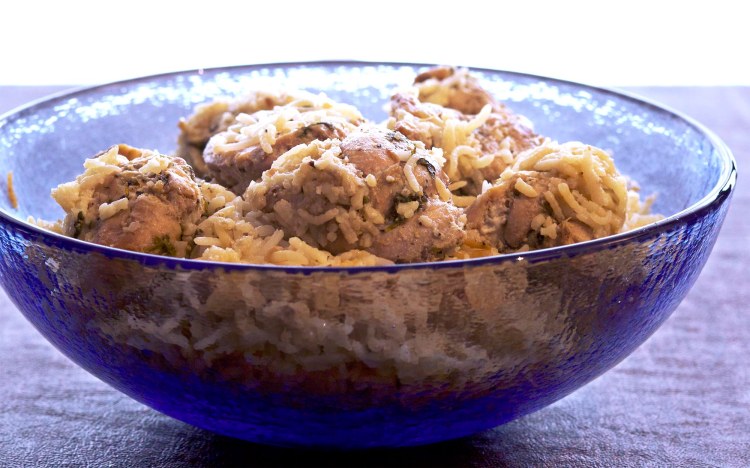
Yesterday I made some white chicken biryani for friends. As the names suggests it is pretty white in color. no chili powder, turmeric, masala powders or coloring that imparts psychedelic colors to a biryani. I truly enjoy its flavorful mild texture. And my daughter loves it.
I did not think about posting a blog on the biryani but this morning I changed my mind. The only issue was that I did not have a decent picture. So what you see up is a badly composed picture of leftovers in the refrigerator. But then a biryani is never visual…. its all about the aroma and flavor.
White Chicken Biryani
To make a biryani I always follow this ratio – Two pounds of meat (chicken/beef/mutton) to 1 1/2 cups of rice. I personally prefer clean cut bone-in meat (chicken and mutton) because it gives more flavor. But when for the easiness of serving and eating I tend to go with boneless meat.
To make a biryani using the ratio above I use the following spices, herbs and ingredients
- 2 pods Black cardamom – 2 pods
- 3 pods Green cardamom – 3 pods
- 10 to 12 Black peppercorns
- 1 teaspoon Cumin
- 1/4 Star anise
- 3 strands Mace
- 1-inch long Cinnamon
- 1 teaspoon Fennel
- 2 teaspoon Sesame seeds
- 2 teaspoon Poppy seeds
- 2 to 3 Thai green chili
- 1 tablespoon chopped ginger
- 1 tablespoon chopped garlic
3. Other ingredients
- 4 onions sliced
- half cup of cilantro
- half cup mint
- one tablespoon Lime juice
- half teaspoon strands of Saffron steeped in warm water
- half cup of cashew nuts ground into a thick paste (consistency of half & half)
- Chicken – cut into bite sized pieces.
- 1 1/2 cup good quality Basmati rice**, washed till water runs clear. Keep aside for about 30 minutes.
- 3 tablespoon oil (vegetable or light olive)
- Salt to taste
4. Salted water on a boiling roll with a cinnamon stick, two bay leaves, and one tablespoon of lime juice
5. Oven pre-heated at 350F
 Global Morsel