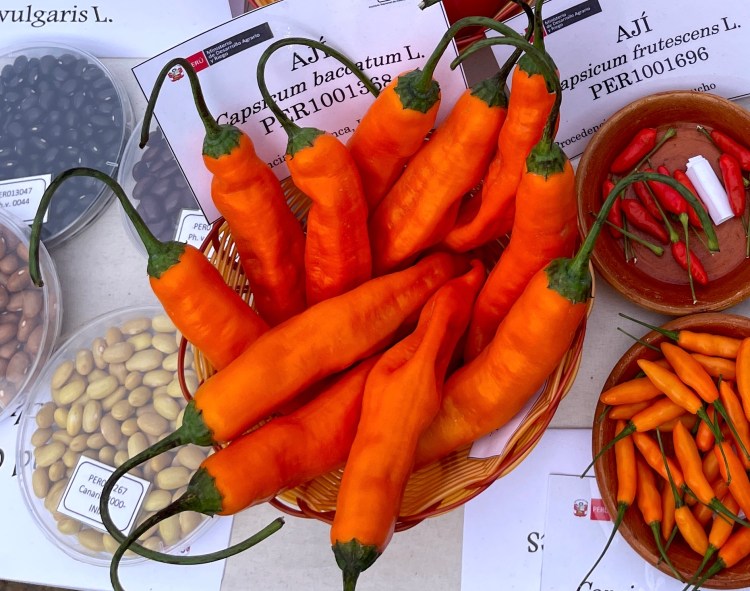
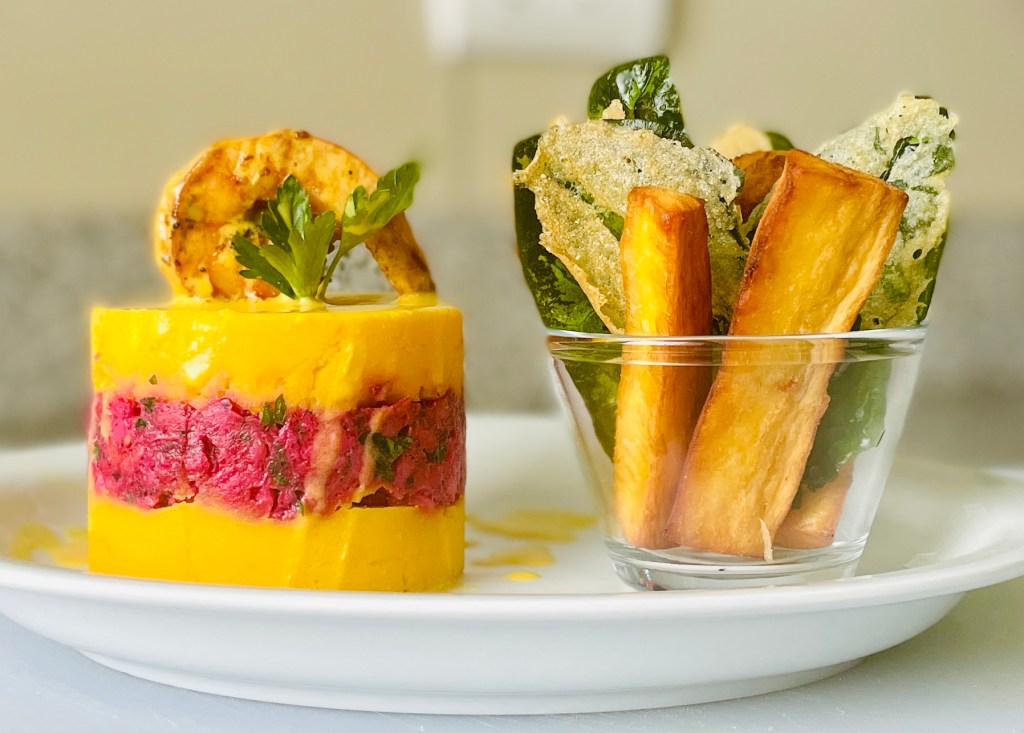
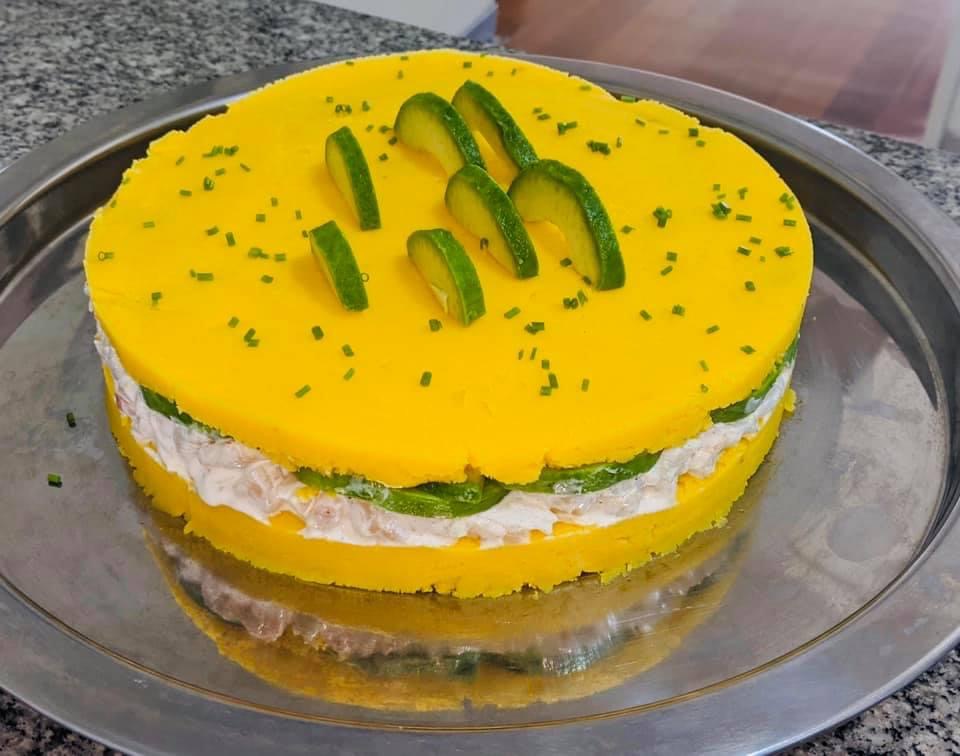
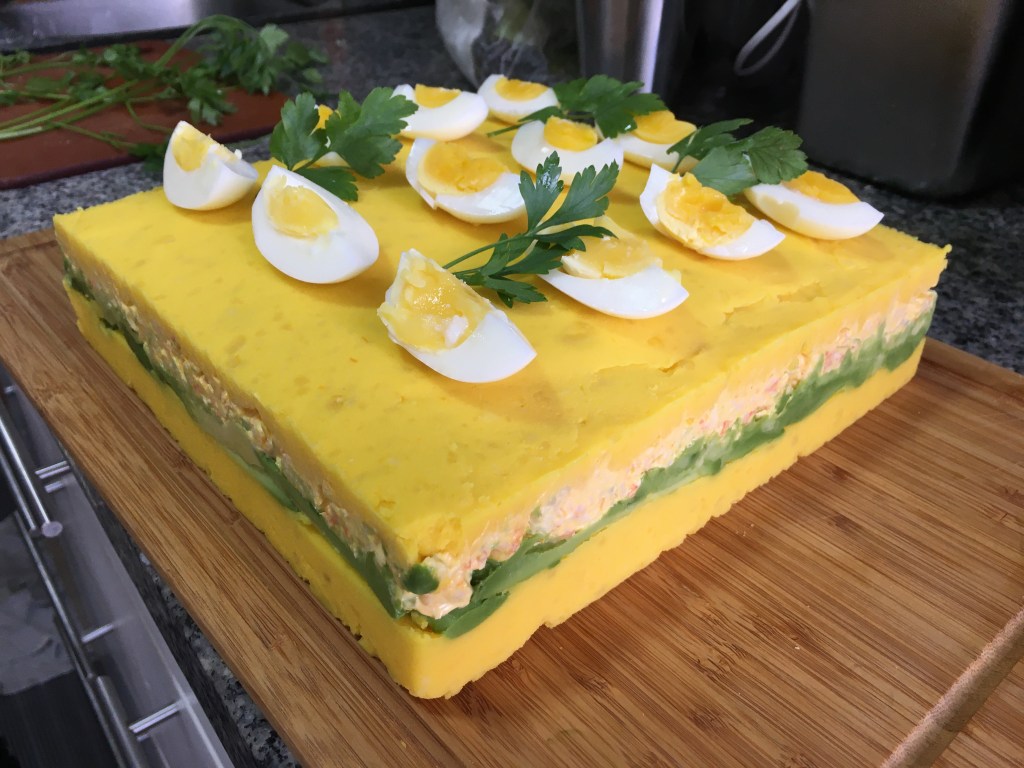
To the Peruvians, the Causa is a symbol of pride and patriotism. The dish, mostly served cold as an appetizer, is steeped in history and has multiple theories of origin. For such a complex pedigree, the dish is made of just two main ingredients – yellow potatoes (papa amarilla) and yellow peppers (aji amarillo).
Among the non-Peruvians I am aware of two schools of Causa – the ones who love it and ones who have no love for it.
For me the Causa is a test of skill. The basics involve getting the perfect consistency of mashed potatoes, the right amount of pepper puree, lime juice, and salt. The rest is a matter of vision.
It took me couple of tries to get the right consistency of the mashed potatoes. During class assignments all my initial attempts were scrutinized well. Assessments ranged from too dry, too mushy, too oily, or too acidic. At home I must have gone through few pounds of potatoes trying to get my mashed potatoes to a perfect consistency.
The ever so versatile papa amarilla is very moody. When treated well, apart from being used to make causa, it makes excellent fries and is good for stews. Boil it three to five more minutes than needed – it falls apart into fine dust.
After few experiments my happy medium to cook the potatoes is to steam them. It also helps me avoid the accidental overcooking of potatoes in a watery bath. Once cooked, I immediately peel them. Once the potatoes are cold, the wafer thin skin of the papa amarilla are bit of pain to peel. I let the peeled potatoes cool for few minutes and then use a fine grater. The grated potatoes are kept in a fridge to dry out any excess moisture.
Even though the potato carries the name “amarilla”, and is indeed slightly yellow, what imparts the Causa its brilliant yellow color and makes it different from the mashed potato dish, is the puree of the aji amarillo. To me if there is any single ingredient that carries the brilliance of Peruvian cuisine it is the pepper, omnipresent in every market and store.
There are some common agreed processes for pureeing the pepper. The veins and seeds need to be removed. Depending on one’s personal preferences, the pepper can be stewed once, twice, three or more times (replacing the water at each stage) to minimize the heat (spiceness). I prefer to retain some heat and hence change water only once. Once the pepper is cooked soft it needs to be blended into a fine puree. This is where the second preference kicks in – some tend to add a neutral oil to the puree. I don’t. To me it makes the causa more oily or as my teacher said “pastosa.”
Once the potatoes and pepper are done, it is the battle of the lime and salt.
The Peruvian lime or limon sutil, a staple of Peruvian cuisine, is acidic, tart, and packs a punch. Handled well, the lime juice is pleasant. Handled roughly, it can quickly sour a dish. For the Causa (and also the ceviche) I prefer to keep halved limes in the fridge submerged in cold water. To extract the juice I use a squeezer and press it only once. Whatever amount of juice I get in the first squeeze is what I use. I also prefer to juice the lime at the last minute, directly into the potato dough.
Causa needs salt – the perfect amount to counter the acidity of the lime juice, temper the heat of the pepper, and overall provide flavor to the dish. Anything more is personal taste.



 Global Morsel